Xylanase for Animal Feed
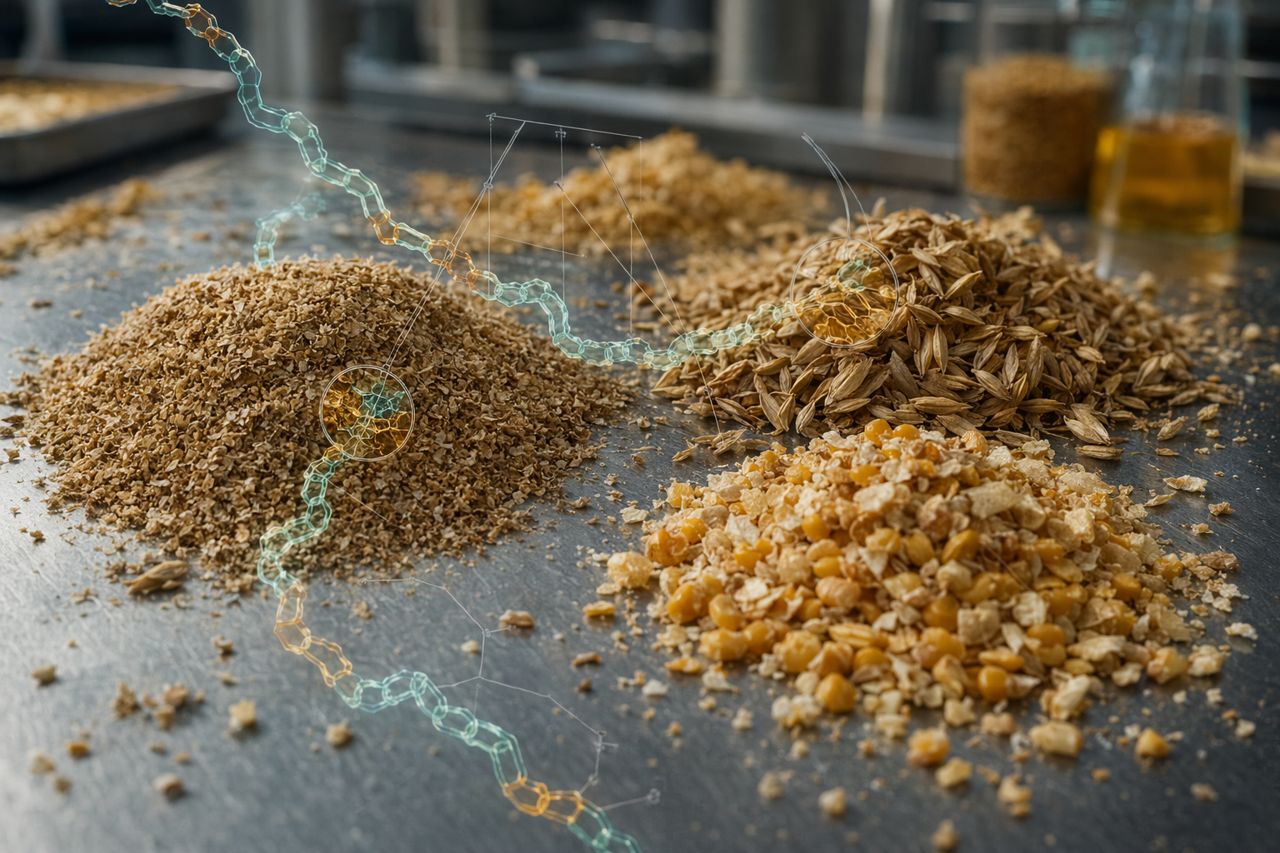
Cereal grains bring energy, protein, and logistics efficiency to feed manufacturing. They also bring xylan and arabinoxylan: structural hemicelluloses that can bind water, increase viscosity, encapsulate nutrients, and interfere with predictable nutrient release.
Buying for production or resale? We supply feed-grade xylanase to feed mills, premix makers, integrators and resellers on a quote basis; send the diet base, quantity and destination. Request a quote.
Xylanase (endo-1,4-β-xylanase) is used in feed systems to selectively open the xylan backbone in plant cell-wall material. For nutritionists, premix formulators, integrators, and feed mills, the goal is practical: improve access to trapped nutrients, support more consistent digestion, and keep pelleted or extruded feeds moving through the process with less friction.
Where xylanase fits in feed formulation
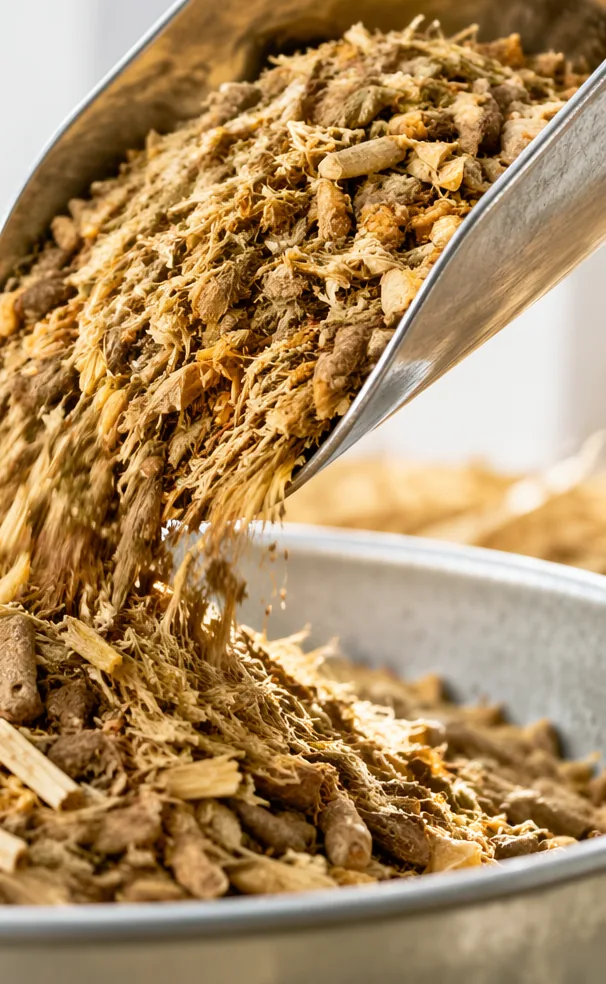
Xylanase is most relevant when diets contain meaningful levels of wheat, rye, triticale, barley, corn, corn by-products, wheat middlings, rice bran, or other fibrous plant ingredients. Its value increases when raw material quality varies, when non-starch polysaccharides are limiting performance, or when formulation teams are trying to extract more utility from local cereals and co-products.
Common feed applications include:
- Poultry feeds using wheat, corn, rye, barley, or bran-rich fractions
- Swine diets where fiber complexity can reduce nutrient availability
- Ruminant concentrates and TMR components containing cereal by-products
- Aquaculture feeds using plant proteins, wheat binders, and grain fractions
- Pet food and treats where extrusion consistency and digestibility matter
- Premix and additive blends for multi-enzyme nutrition platforms
What xylanase helps manage
Arabinoxylan-driven viscosity
Soluble arabinoxylans can absorb water and raise digesta viscosity, especially in young poultry and cereal-heavy diets. Higher viscosity can slow diffusion of digestive enzymes and nutrients, affecting the efficiency of energy and amino acid utilization. Xylanase helps break down portions of this network, supporting lower viscosity and more efficient nutrient contact.
Cell-wall encapsulation
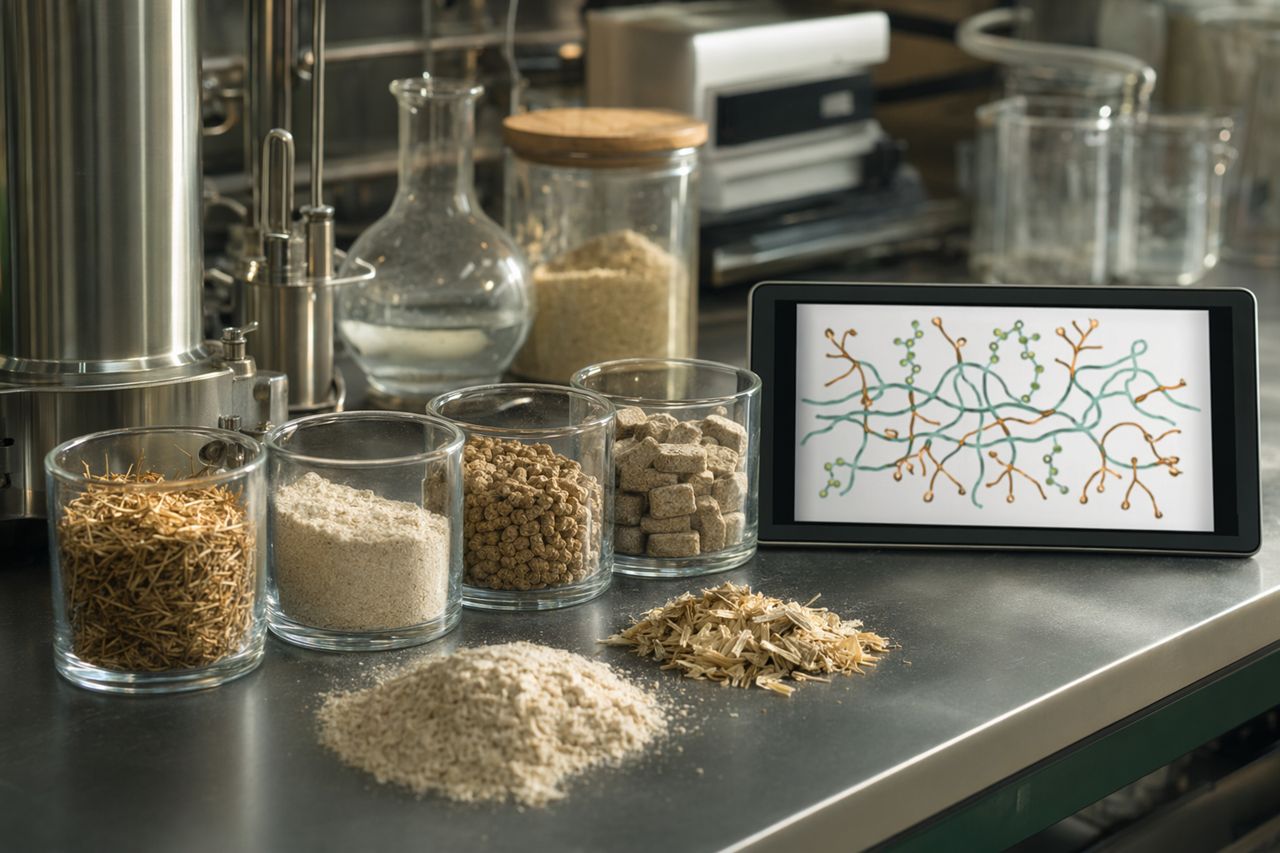
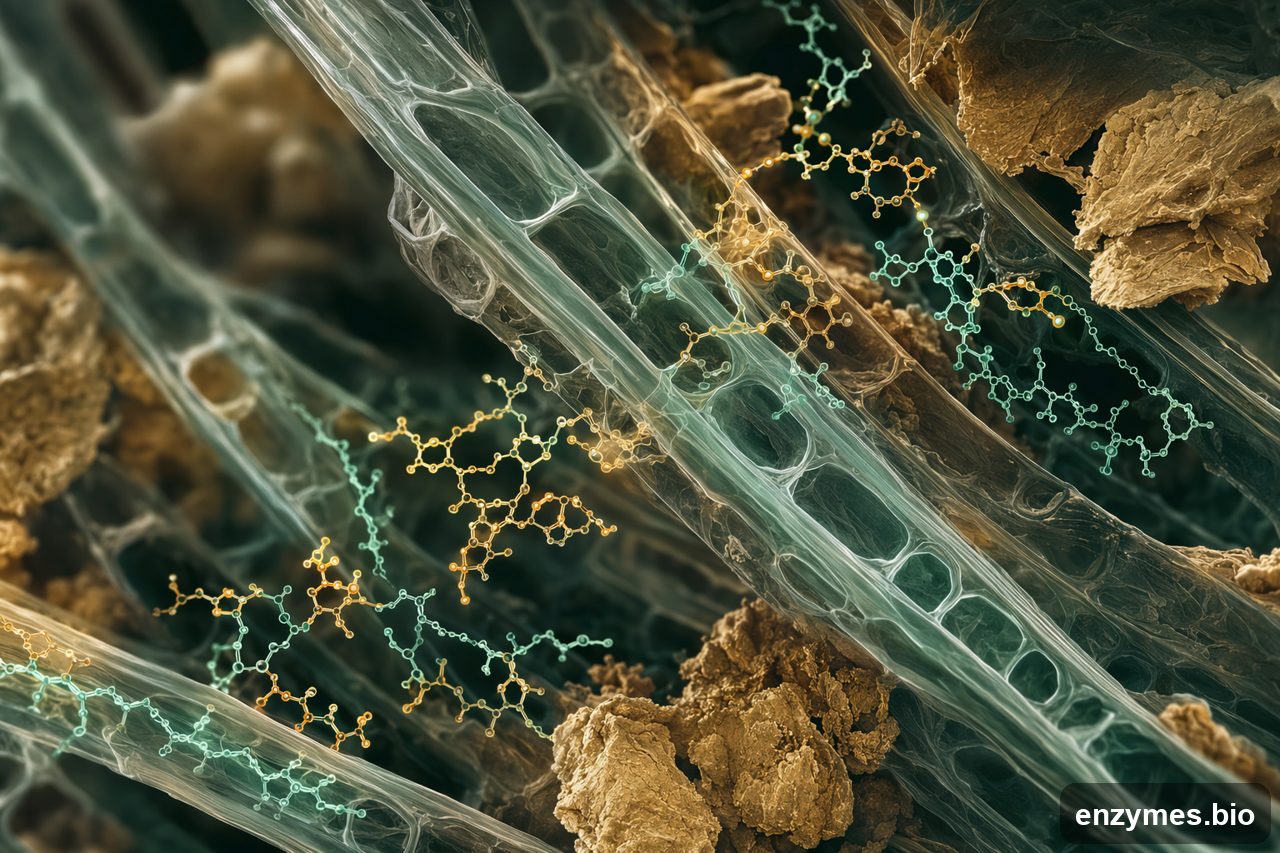
A significant portion of starch, protein, and lipid can remain physically trapped inside plant cell-wall structures. By hydrolyzing xylan linkages in hemicellulose, xylanase helps loosen the matrix around nutrients. This does not replace core formulation discipline, but it can improve the practical value of grain and co-product inputs.
Feed processing variability
Fiber composition changes by grain origin, harvest season, storage condition, and milling fraction. Xylanase can help reduce the performance penalty of this variability by targeting a major structural component common to many cereal ingredients.
Application by species
Poultry
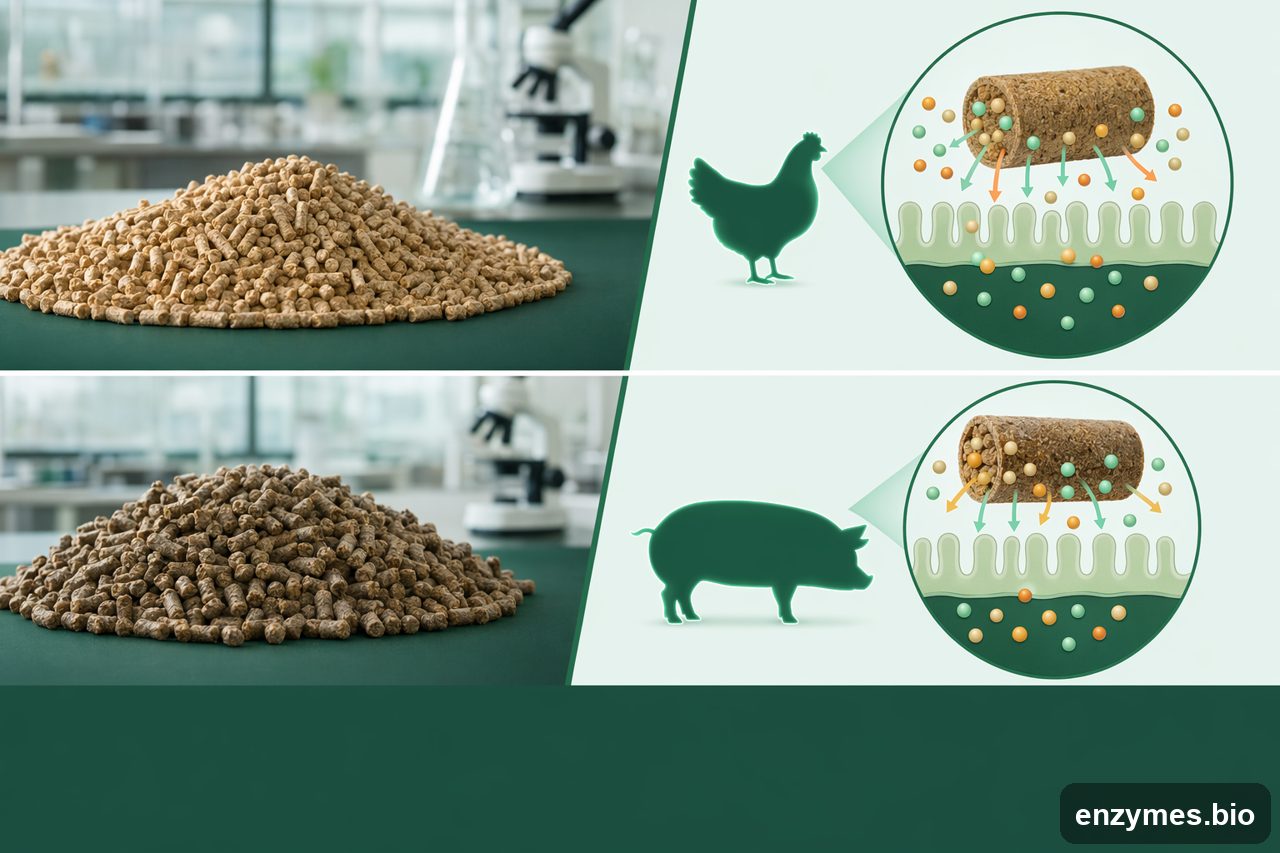
In broilers, layers, breeders, and turkeys, xylanase is commonly used to support cereal utilization and manage viscosity-related challenges. It is especially relevant in wheat-, rye-, barley-, and corn-based diets, including programs with high inclusion of bran or distillers grains. Expected commercial objectives include improved litter condition support, more consistent feed conversion, and better nutrient access in variable grain markets.

Swine
Swine diets often use corn, wheat, barley, and co-products with meaningful insoluble and soluble fiber fractions. Xylanase can support nutrient release from plant cell walls and help nutrition teams manage ingredient flexibility. It is frequently considered in grower-finisher feeds, sow diets, and programs using wheat middlings, DDGS, or other fibrous cereal streams.
Ruminants
For ruminants, xylanase is used differently than in monogastrics. The focus is generally on improving fiber accessibility in concentrates, grain fractions, and mixed rations, while supporting rumen fermentation dynamics. Application strategy should account for forage base, concentrate level, ration moisture, and mixing practice.
Aquaculture
As aquafeeds include more plant-based raw materials, hemicellulose can affect pellet structure, water interaction, and nutrient access. Xylanase may be evaluated in feeds containing wheat, plant protein meals, cereal binders, and fibrous co-products. Processing compatibility is important because extrusion conditions can be demanding.
Pet food
In dry pet food and functional treats, xylanase can be used to support digestibility and manage cereal or vegetable fiber fractions. It may also help formulation teams maintain consistent extrusion behavior where bran, grain flours, pulses, or vegetable fibers are part of the recipe.
Feed mill considerations
Pelleting and conditioning
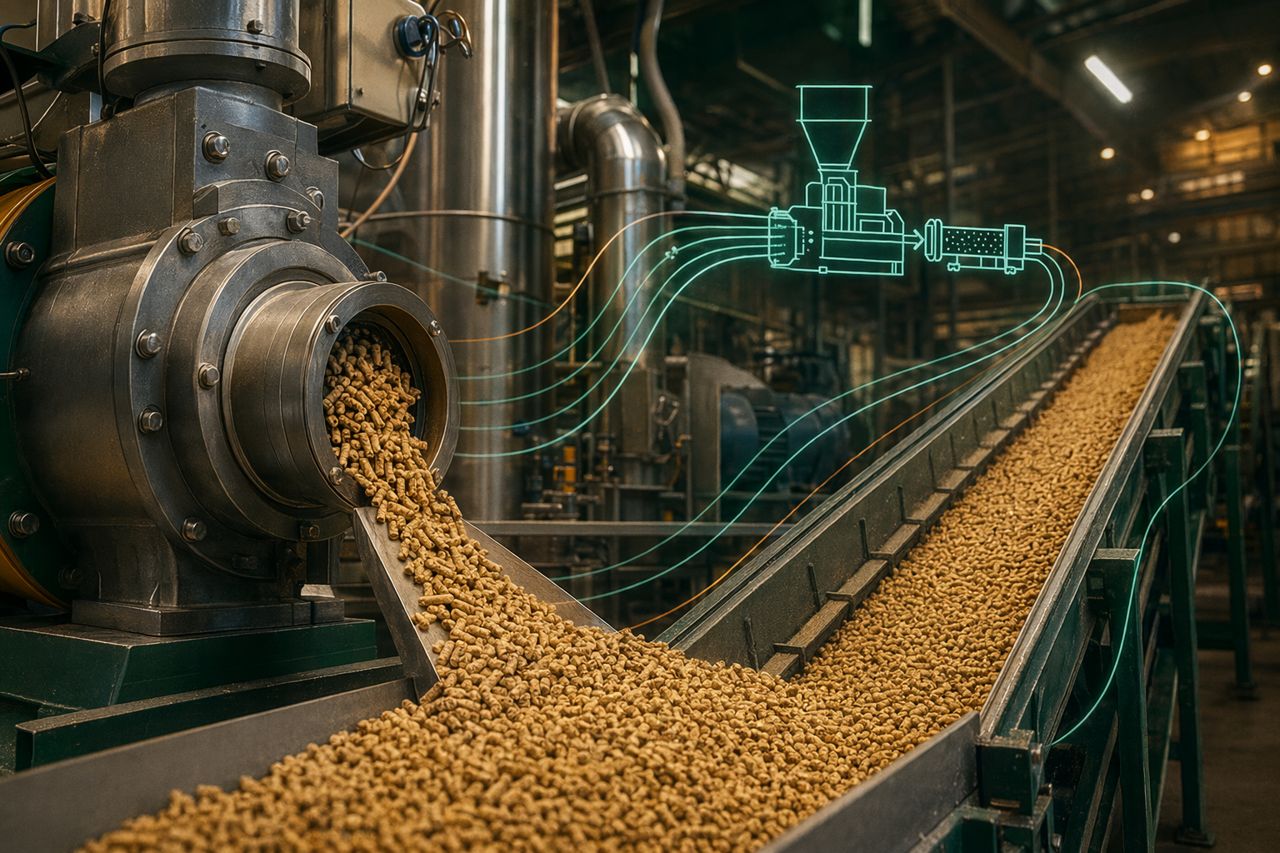
Xylanase should be selected and applied with the mill’s conditioning temperature, retention time, moisture addition, and post-pellet handling in mind. Thermal exposure, shear, and storage conditions all influence enzyme retention in the finished feed. For high-heat processes, teams may evaluate thermostable formats, coating systems, or post-pellet liquid application.
Premix compatibility
When xylanase is included in vitamin-mineral premixes, compatibility with minerals, organic acids, carriers, moisture, and storage time should be confirmed. A good premix strategy protects dispersion quality without exposing the enzyme to avoidable stress.
Liquid application
Liquid xylanase can be suitable for post-pellet application, mash feed systems, or integrated dosing lines. Key controls include pump calibration, spray coverage, tank hygiene, water quality, and batch traceability.
Granular and powder formats
Dry xylanase formats are commonly used in premix manufacturing and direct feed blending. Practical selection criteria include dust behavior, blend uniformity, segregation risk, carrier compatibility, and packaging protection during storage and transport.
Ingredient targets
Xylanase is most often evaluated against these feed materials:
- Wheat and wheat middlings
- Rye and triticale
- Barley and barley by-products
- Corn and corn co-products
- Rice bran and cereal brans
- DDGS and distillers fractions
- Plant protein meals with cereal fiber carryover
- Pet food grain and vegetable fiber blends
The best-fit program depends on the cereal base, animal species, processing route, and economic objective. Xylanase Enzyme Solutions can support technical discussions around ingredient profile, format selection, application point, and commercial scale-up.
Commercial outcomes buyers usually track
Feed producers and integrators typically assess xylanase through practical manufacturing and animal performance indicators, such as:
- Feed conversion trend
- Weight gain or production consistency
- Energy matrix contribution
- Ingredient flexibility
- Pellet quality and process behavior
- Litter or manure condition indicators
- Nutrient digestibility markers
- Finished feed stability through distribution
- Cost-in-use against diet reformulation value
These outcomes depend on diet composition, species, age, health status, mill conditions, and the enzyme delivery format. Xylanase is not a universal correction for poor raw material control, but it can be a strong tool when cereal fiber is a meaningful constraint.
Specification topics for procurement and R&D
When qualifying xylanase for feed use, buyers should define requirements beyond price per kilogram. Important topics include:
- Enzyme type: Xylanase (endo-1,4-β-xylanase)
- Physical format: powder, granular, coated, or liquid
- Target species and diet class
- Processing route: mash, pelleted, expanded, extruded, or post-pellet sprayed
- Thermal exposure profile
- Carrier and premix compatibility
- Moisture and storage conditions
- Packaging size and handling requirements
- Documents needed for feed-grade purchasing in your market
- Batch-to-batch consistency and supply reliability
How Xylanase Enzyme Solutions supports feed projects
We supply feed xylanase in bulk to feed mills, premix and concentrate makers, integrators, feed-additive companies and distributors. Before we quote, we clarify the operating window with you. That means understanding the grain base, process conditions, format needs, and desired commercial outcome before recommending a supply approach.
Typical project inputs include:
- Target animal species and production stage
- Main cereal and co-product inclusions
- Feed form and processing temperature range
- Premix or direct-application plan
- Packaging and storage requirements
- Trial objective and success criteria
- Forecast volume and delivery region
Request a wholesale quote
We supply feed-grade xylanase for cereal and by-product diets in bulk to manufacturers, blenders, distributors and resellers, on a quote-only basis. To get a grade recommendation and a price, send the product or application, the quantity (trial lot, monthly or annual volume), the destination country, and the process step where the enzyme will be added. Form and pack size are quoted per order, and we tell you which documents are available for that grade.
What to send with a feed xylanase inquiry:
- The diet base: wheat, barley, rye, corn-soy, bran or by-product inclusions
- The species and feed form (mash, pellet, crumble, extruded)
- Whether the enzyme goes into a premix, a concentrate or straight into the mixer
- The quantity: trial lot, monthly volume or annual contract
- The destination country