Xylanase for aquafeed built around plant protein and cereal fiber
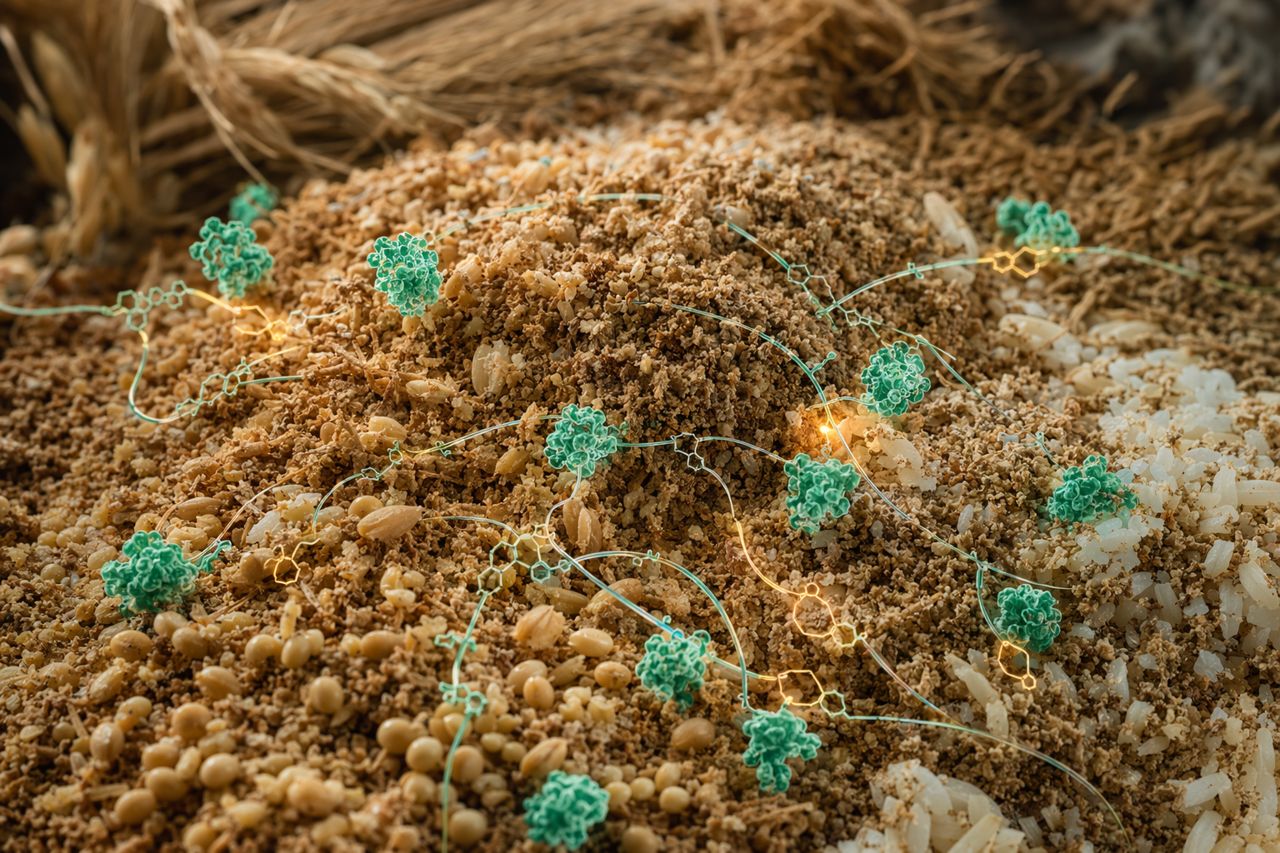
Aquafeed is no longer a purely marine-ingredient system. Soybean meal, wheat, wheat middlings, rice bran, corn coproducts, lupin, peas, and other plant-derived raw materials are now common tools for cost control and supply resilience. The technical challenge is the fiber fraction: especially arabinoxylans and related non-starch polysaccharides that can bind water, raise digesta viscosity, reduce nutrient diffusion, and leave usable energy locked inside plant cell-wall structures.
Buying for production or resale? We supply xylanase for plant-based aquafeed formulas to feed mills, premix makers and resellers on a quote basis; send the formula base, quantity and destination. Request a quote.
Xylanase is positioned for formulas where plant fiber is part of the economic model, not an accidental contaminant. Xylanase (endo-1,4-β-xylanase) targets the β-1,4 linkages in xylan backbones, helping open cereal and plant cell-wall networks so nutrition teams can manage digestibility, feed conversion risk, and raw-material flexibility with more control.

Where it fits in aquafeed
Use xylanase when the formula includes meaningful levels of:
- Soybean meal, soy protein concentrate, or mixed soy ingredients
- Wheat, wheat flour, wheat bran, wheat middlings, or wheat-based binders
- Rice bran, corn fiber, DDGS, or cereal coproduct streams
- Pea, lupin, rapeseed/canola meal, sunflower meal, or other plant meals
- Cost-optimized formulations where digestible nutrient release matters more than headline crude protein
The goal is not to “erase” fiber. The goal is to make the fiber system less obstructive: lower the barrier around starch, protein, and lipid fractions; reduce the viscosity effect of soluble arabinoxylans where relevant; and improve access for the animal’s own digestive process.
Practical value for feed manufacturers
1. Better use of plant raw materials
Plant ingredients vary by origin, season, milling stream, heat history, and storage condition. Xylanase gives formulation teams an additional process tool for managing the cell-wall fraction rather than treating every batch as nutritionally fixed.
Potential commercial outcomes include:
- More room to use cereal byproducts without over-penalizing the formula
- Improved nutritional consistency across variable plant ingredient lots
- Support for fishmeal reduction strategies where plant inclusion is economically necessary
- Better release of entrapped nutrients from fibrous plant matrices
2. Support for feed conversion targets
In plant-forward aquafeeds, viscosity and encapsulated nutrients can quietly increase the cost of gain. Xylanase helps open arabinoxylan-rich structures, supporting nutrient availability and potentially reducing the gap between calculated nutrition and observed pond, tank, or cage performance.
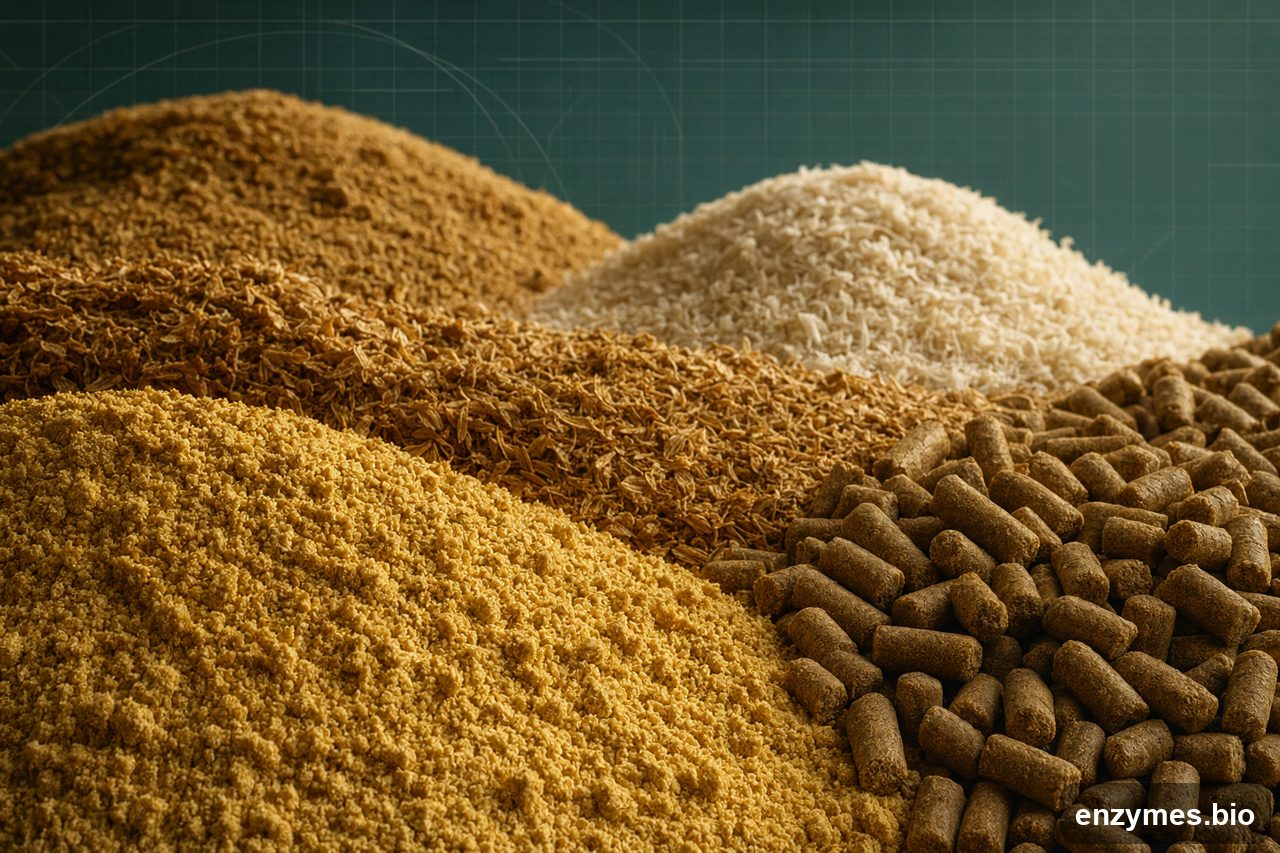
The strongest case is usually seen where diets contain wheat fractions, cereal coproducts, or mixed plant meals with measurable non-starch polysaccharide load.
3. Formulation flexibility without losing process discipline
Xylanase does not replace ingredient quality control. It works best when paired with raw-material screening, extrusion records, pellet durability checks, and species-specific feeding data. Xylanase Enzyme Solutions is suited for teams that want enzyme use integrated into formulation economics, not treated as a generic additive.
Species and production systems
Application fit depends on diet design, species physiology, and culture system. Xylanase is commonly evaluated in feeds for:
- Tilapia and other omnivorous warmwater fish
- Carp and mixed freshwater species
- Catfish and pangasius-type systems
- Shrimp feeds using cereal binders or plant protein systems
- Marine fish diets where plant substitution is being pushed carefully
Carnivorous species may show a narrower response unless the formula contains substantial cereal or plant meal fractions. Omnivorous species and feeds with cereal-rich binders often provide the clearest technical rationale.
Formulation and processing considerations
Substrate first, enzyme second
Xylanase response depends on the xylan-containing substrate. A wheat-based formula, a soy-heavy formula, and a rice-bran formula can behave differently even at the same crude fiber number. Look beyond crude fiber and consider arabinoxylan load, soluble fiber behavior, ingredient particle size, and heat history.

Thermal and process compatibility
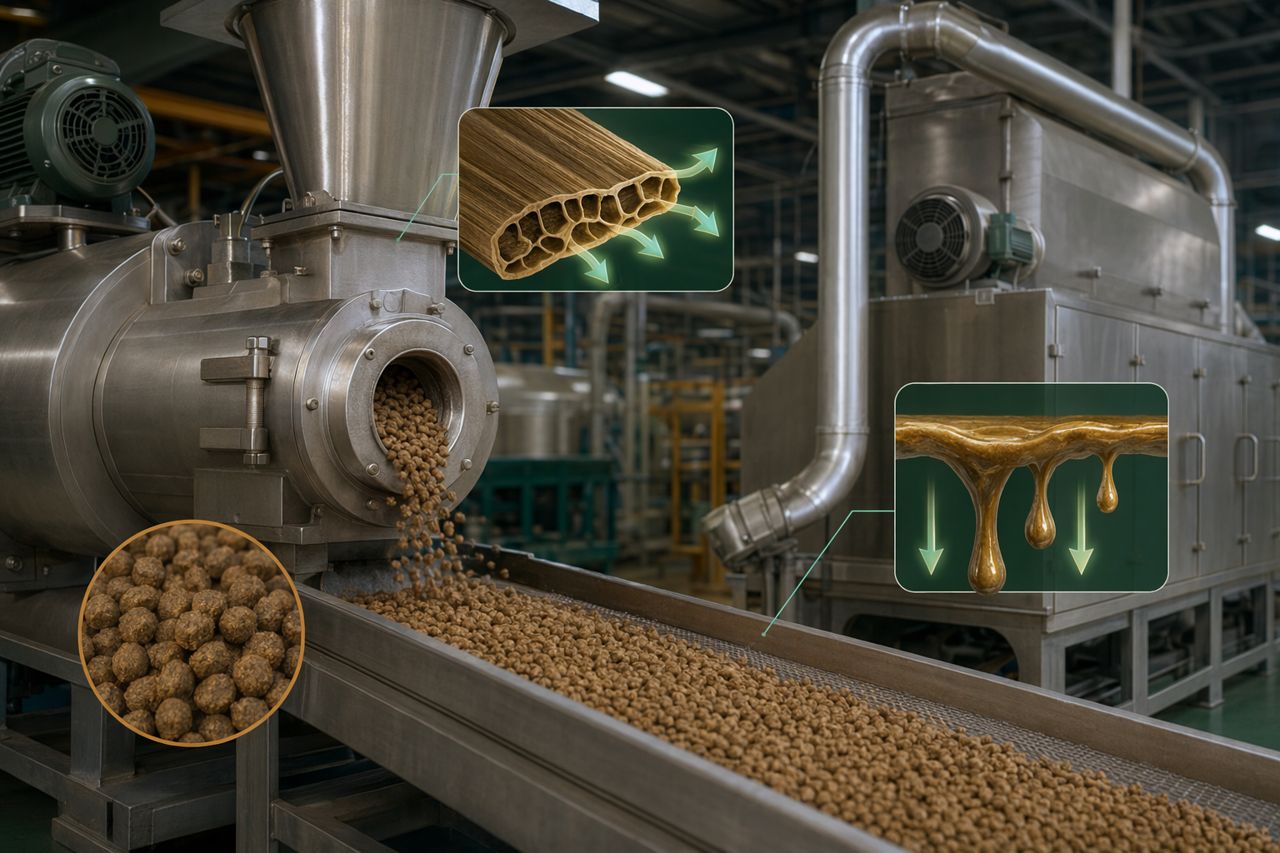
Aquafeed commonly involves conditioning, extrusion, drying, cooling, and sometimes post-coating. Enzyme placement should be matched to the process:
- Dry inclusion before conditioning where processing conditions are compatible
- Post-pellet or post-extrusion liquid application where heat exposure is too severe
- Premix handling where distribution uniformity is a bigger risk than heat
- Coating systems where oil, palatants, and liquid enzyme compatibility must be checked
Xylanase Enzyme Solutions supports process discussions around where the enzyme should enter the manufacturing line and how to validate recovery through the feed system without disclosing trader-confidential assay details.
Moisture, viscosity, and pellet behavior
Fiber breakdown can influence water movement in mash, dough, extrudate, and digesta. In some systems, the formulation team may need to observe:
- Mash hydration behavior
- Extruder torque and pressure trend
- Pellet or extrudate integrity
- Water stability in shrimp and slow-feeding fish applications
- Oil coating uptake and surface condition
The best implementation plan checks both animal response and feed physical quality.
What Xylanase Enzyme Solutions helps you evaluate
For purchasing, R&D, and production teams, the decision should be evidence-led. Typical evaluation questions include:
- Which plant ingredients are creating the main xylan load?
- Is the target species likely to benefit from reduced fiber obstruction?
- Will the enzyme be exposed to aggressive heat or moisture during processing?
- Is the feed produced as pellet, extrudate, crumble, or coated product?
- What commercial metric matters most: ingredient substitution, feed conversion, growth rate, fecal output, or formulation cost?
- How will the trial compare treated and untreated feed under the same production and feeding conditions?
Suggested trial structure
A practical plant-forward aquafeed trial usually includes:
- A control formula representing current commercial production
- A xylanase-treated version of the same formula
- Optional reformulated diets using more economical plant or cereal streams
- Feed physical-quality checks before animal testing
- Species-appropriate performance tracking over a meaningful feeding period
- Cost-per-output analysis, not just ingredient-cost comparison
This structure helps separate true enzyme value from normal biological and processing variation.
Documents for your market
Document needs differ by grade and destination. Tell us where the feed will be produced and sold, and we tell you which documents are available for that grade.
Request a wholesale quote
We supply xylanase for fish and shrimp feeds with plant protein and cereal ingredients in bulk to manufacturers, blenders, distributors and resellers, on a quote-only basis. To get a grade recommendation and a price, send the product or application, the quantity (trial lot, monthly or annual volume), the destination country, and the process step where the enzyme will be added. Form and pack size are quoted per order, and we tell you which documents are available for that grade.