Xylanase for Botanical Fiber Modification
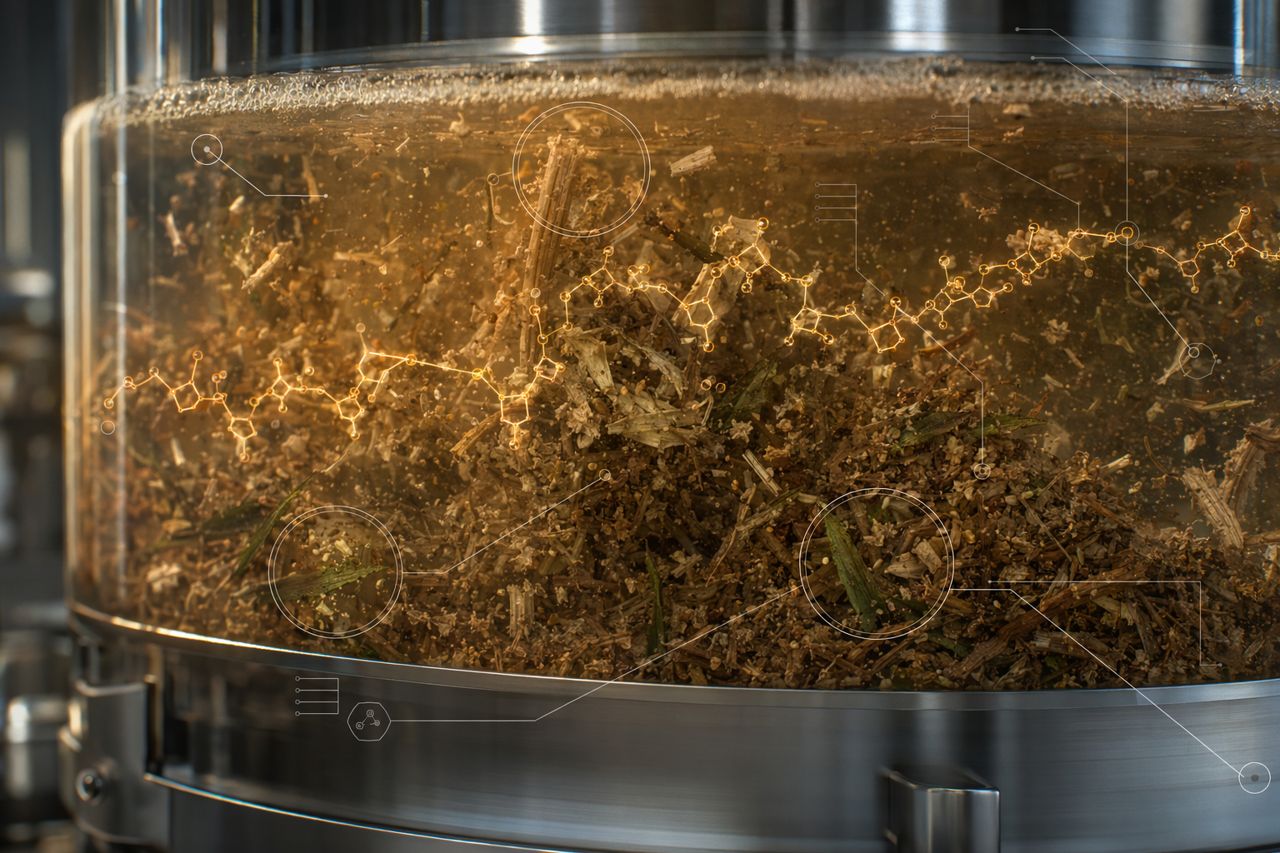
Botanical raw materials are not uniform powders. Leaves, husks, roots, peels, stems, bark fractions, cereal brans, and other plant-derived inputs carry different proportions of cellulose, lignin, pectin, starch, protein, ash, oils, and hemicellulose. In many of these matrices, xylan-rich hemicellulose acts like a cross-linked fiber net: it binds water, increases slurry resistance, traps extractables, and complicates clarification.
Buying for production or resale? We supply xylanase for botanical and plant-ingredient processing to manufacturers, extract makers and resellers on a quote basis; send the material, quantity and destination. Request a quote.
Xylanase Enzyme Solutions supplies Xylanase (endo-1,4-β-xylanase) for processors who need controlled modification of xylan-containing plant cell walls without treating every fiber problem as the same problem.
Used correctly, xylanase can help make botanical streams easier to extract, pump, separate, filter, and standardize.
Where xylanase creates process value
Botanical extraction support
In aqueous or mixed-process botanical extraction, intact hemicellulose can limit mass transfer. Xylanase opens the xylan backbone within plant cell-wall architecture, helping release soluble and suspended components from milled or macerated biomass.
Potential processing gains include:
- Faster release of target extractives from fibrous botanical solids
- Improved wetting and penetration of process liquor
- Reduced hold-up of soluble material inside swollen fiber
- Better extraction consistency across variable crop lots
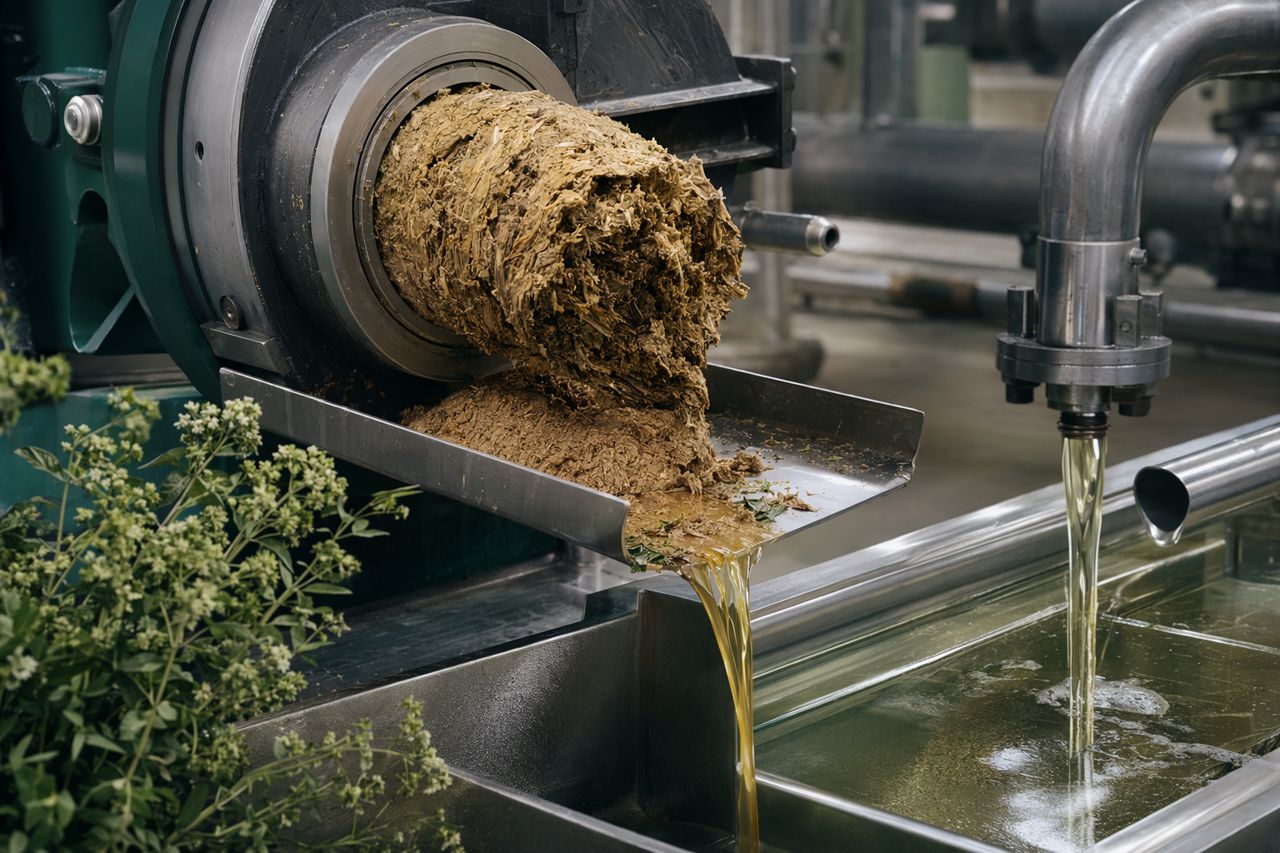
- Easier post-extraction press-out or decanting
Clarification and solids management
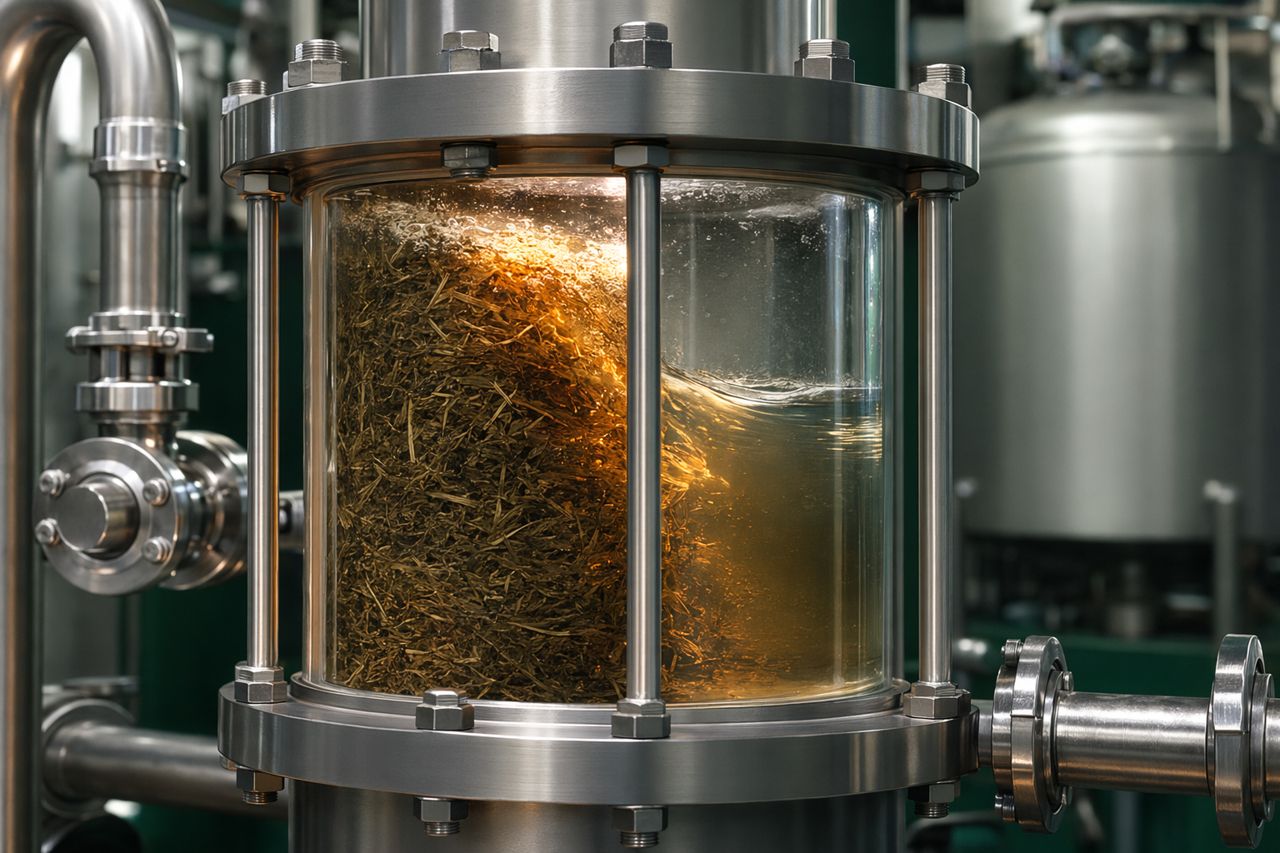
Xylan-rich fines can remain suspended, hold water, and increase the load on screens, centrifuges, filters, and settling systems. Partial enzymatic opening of the hemicellulose network can reduce fiber entanglement and improve liquid-solid behavior.
Typical objectives include:
- Lower slurry resistance during transfer
- More predictable sedimentation or centrifuge response
- Improved filterability after extraction
- Reduced retained liquid in botanical press cake
- Cleaner handling of fine fibrous solids
Fiber modification before downstream conversion
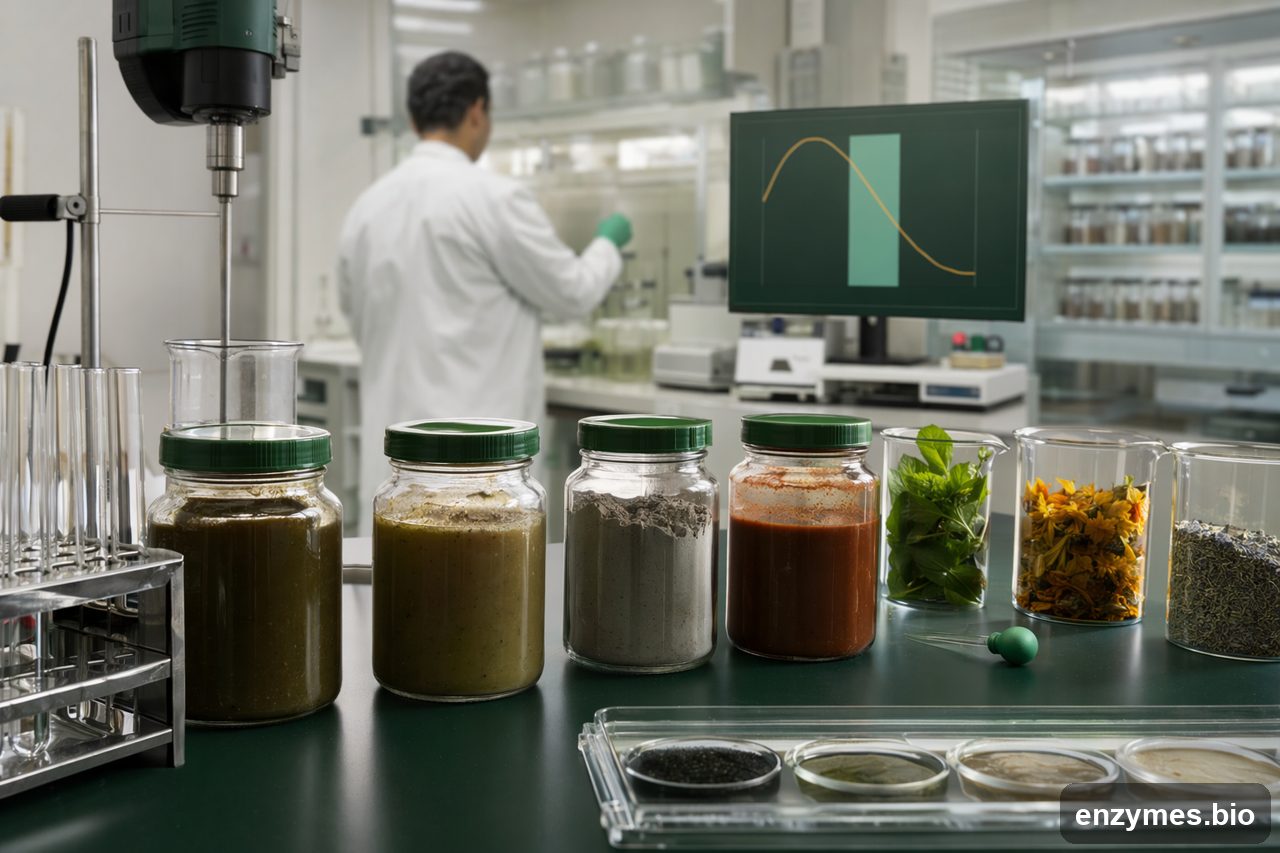
Some botanical processes intentionally modify fiber structure before fermentation, drying, pressing, compounding, texturizing, or further enzymatic treatment. Xylanase can be used as part of a staged pretreatment strategy where the goal is to make the plant matrix more accessible while preserving overall process control.
Relevant use cases include:
- Bran and hull processing
- Leaf and stem biomass conditioning
- Peel, pulp, and pomace modification
- Herbal and botanical extraction lines
- Fibrous byproduct valorization
- Plant-based ingredient preparation
How xylanase works in plant material
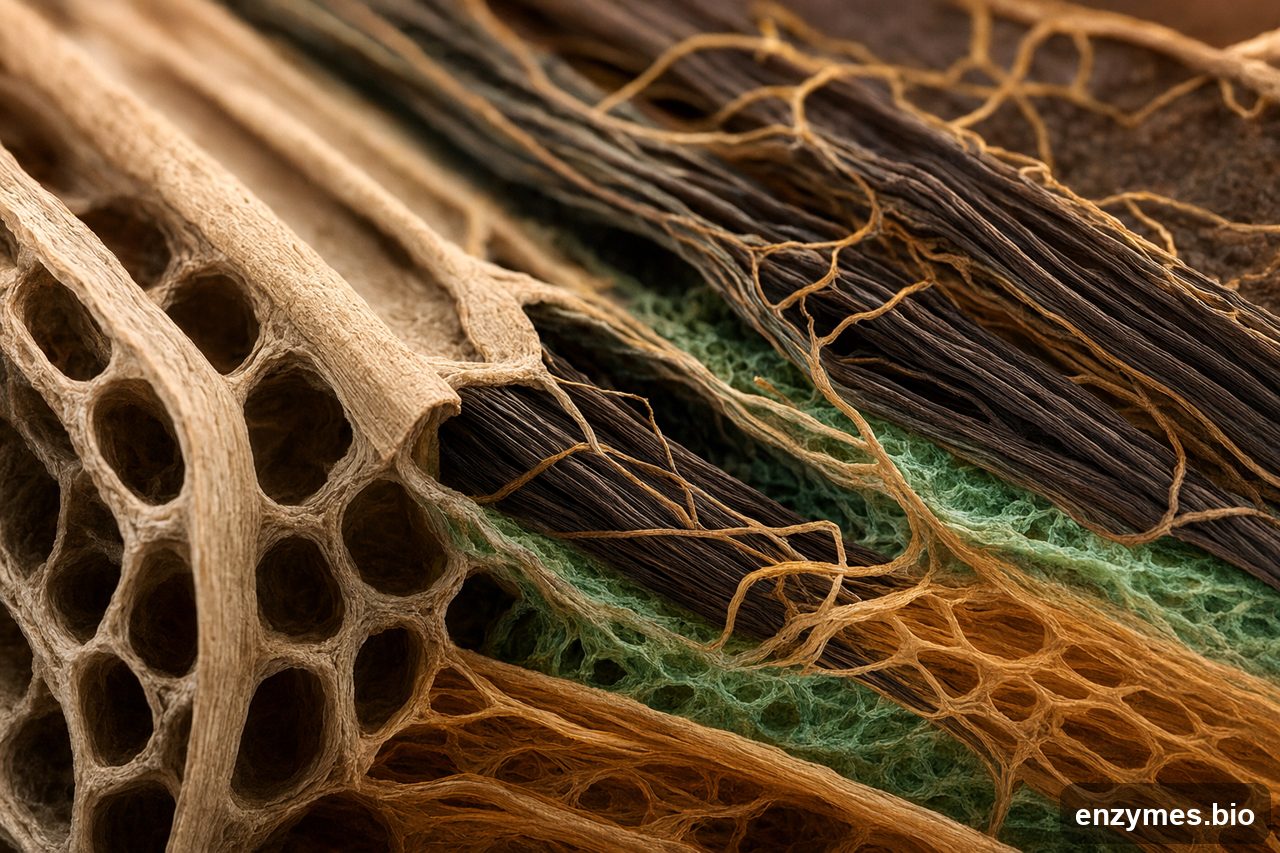
Xylanase cleaves internal bonds in the xylan backbone, a major hemicellulose component in many plant cell walls. By reducing the structural contribution of xylan, the enzyme can loosen fiber networks and alter water-binding behavior.
In practical terms, this may translate into:
- Less viscous botanical slurries
- More open cell-wall structure
- Improved diffusion of process liquor
- More efficient separation of liquor from solids
- Lower mechanical burden on pumps and filters
- Better repeatability when raw material quality shifts
Xylanase is not a universal fiber-destruction tool. It is most useful where xylan-rich hemicellulose is a meaningful contributor to process resistance. Xylanase Enzyme Solutions helps evaluate whether xylanase belongs in the process, where it should be added, and what grade profile fits the operating window.
Process points that matter
1. Botanical matrix
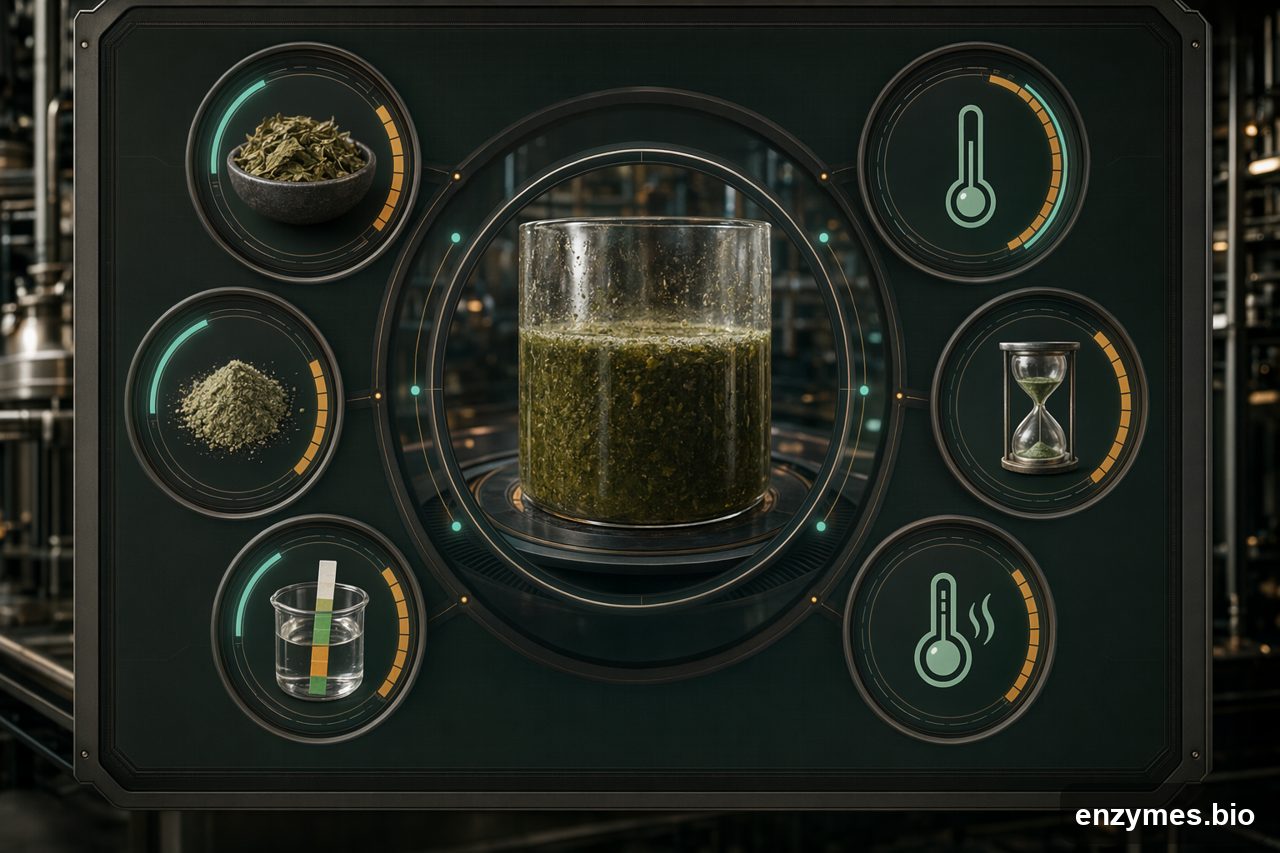
Different botanicals respond differently. Cereal brans, grasses, hardwood-derived fibers, seed coats, stems, and fruit processing residues can all contain xylan, but the surrounding structure varies. Lignification, pectin content, particle size, drying history, and mineral load can strongly influence response.
2. Addition point
Xylanase may be introduced during hydration, extraction, maceration, holding, pretreatment, or before separation. The right addition point depends on whether the target is extract release, viscosity control, dewatering, clarification, or downstream accessibility.
3. Residence time and mixing
Botanical solids often hydrate unevenly. Good enzyme performance depends on sufficient contact between enzyme, liquid phase, and fiber surface. Slurry thickness, agitation, particle distribution, and tank geometry all matter.
4. Process compatibility
pH, temperature, salts, preservatives, solvent fraction, botanical polyphenols, and cleaning carryover can affect performance. Xylanase Enzyme Solutions supports practical compatibility screening before scale-up.
5. Enzyme finish
Some processes need ongoing fiber modification; others need a clean endpoint before filtration, concentration, drying, blending, or packaging. Heat history and downstream conditions should be considered during enzyme selection.
Choosing the right xylanase profile
For botanical processing, the best xylanase is not always the most aggressive option. Selection should consider the desired degree of fiber opening, process tolerance, impact on filtration, and the risk of over-modifying texture or suspended solids.
Xylanase Enzyme Solutions can help match grade characteristics to commercial priorities such as:
- Broad botanical raw-material variability
- Low impact on non-target components
- Compatibility with existing extraction equipment
- Stable performance in real plant slurries
- Manageable process timing
- Clean integration into filtration or centrifugation steps
- Clear grade and pack information for purchasing
We do not publish activity-unit comparisons or assay-specific performance claims on application pages because these are not reliable indicators of plant-scale performance across different botanical matrices. Instead, we quote a grade for the buyer’s actual material and process.
What to test in a plant trial
A useful xylanase trial should measure the outcome the process actually needs. Common evaluation points include:
- Extract yield or soluble solids release
- Slurry flow behavior
- Press cake moisture or retained liquor
- Filtration time and filter loading
- Centrifuge separation quality
- Turbidity or suspended solids profile
- Downstream evaporation or drying behavior
- Sensory, color, or specification impact where relevant
- Batch-to-batch consistency across raw-material lots
For R&D teams, small-scale screening should be designed to predict plant behavior, not simply to show enzyme activity in isolation. For production teams, trials should identify a usable operating window with clear pass/fail criteria.
Implementation pathway
Step 1: Define the process bottleneck
Tell us whether the priority is extraction yield, viscosity reduction, clarification, press-out, filtration, or fiber modification. The same botanical material may need a different xylanase strategy depending on the bottleneck.
Step 2: Characterize the raw material
Useful details include botanical source, crop or supplier variability, milling level, moisture history, solids loading, extraction medium, and downstream unit operations.
Step 3: Screen compatible grade options
Xylanase Enzyme Solutions helps narrow grade options based on process conditions and the required degree of fiber opening.
Step 4: Confirm at pilot or plant scale
Scale-up should track real production metrics: liquid recovery, throughput, separation behavior, quality specifications, and operator handling.
Step 5: Lock procurement and quality requirements
Once the operating window is defined, we quote grade, form, pack and volume, and tell you which documents are available for that grade.
Built for commercial botanical processors
Xylanase Enzyme Solutions supplies businesses that operate real extraction lines, fiber handling systems, and ingredient manufacturing processes. We understand that enzyme adoption has to justify itself through throughput, yield, quality, or operating stability.
Use xylanase when the target is controlled opening of xylan-rich plant structure — not vague “natural processing,” not overbroad fiber degradation, and not a lab result that fails under production conditions.
Request a wholesale quote
We supply xylanase for botanical, herbal and plant-ingredient processing in bulk to manufacturers, blenders, distributors and resellers, on a quote-only basis. To get a grade recommendation and a price, send the product or application, the quantity (trial lot, monthly or annual volume), the destination country, and the process step where the enzyme will be added. Form and pack size are quoted per order, and we tell you which documents are available for that grade.