Xylanase for improver blends, flour mills and industrial bakeries
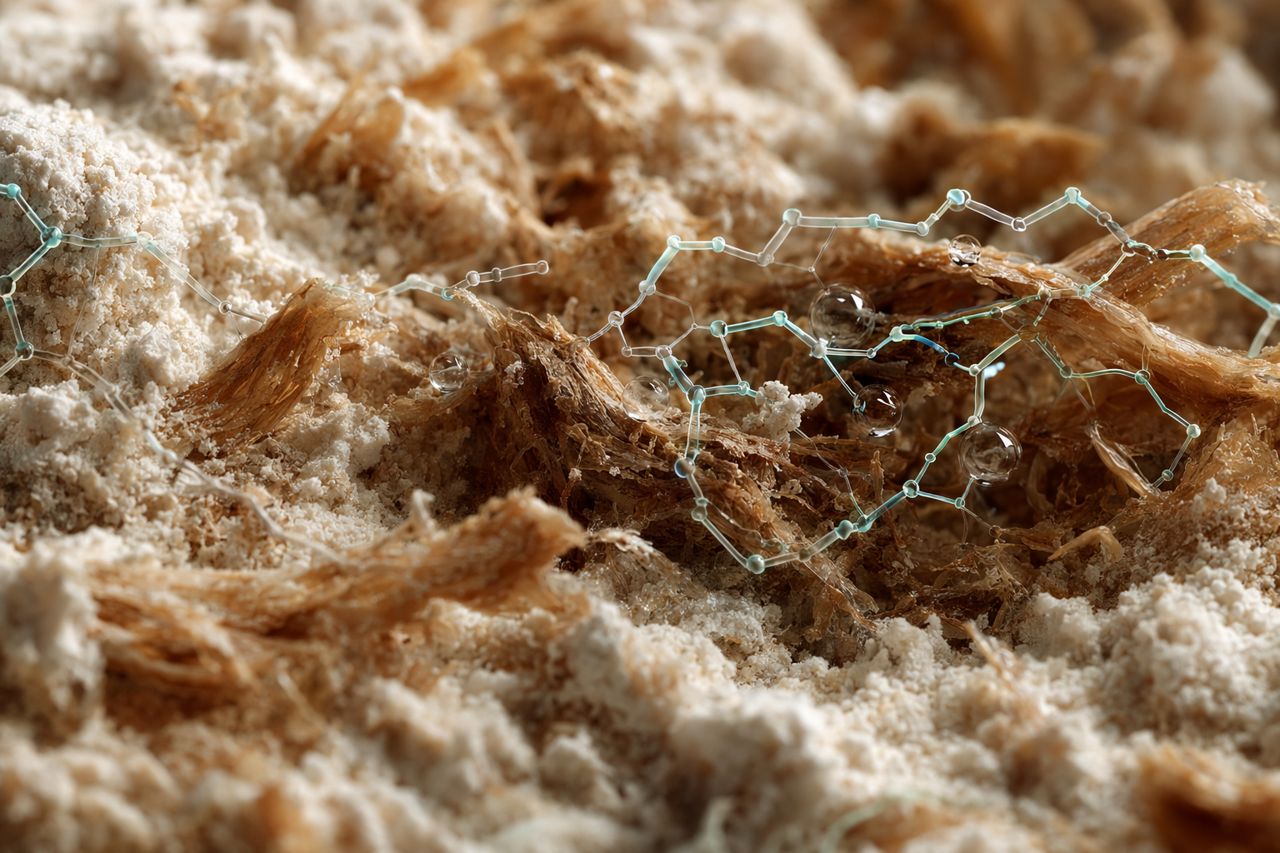
Xylanase (endo-1,4-β-xylanase) is used in wheat-based baking to modify arabinoxylans: the hemicellulose fraction that strongly influences water binding, dough viscosity, gas cell stability, and crumb formation.
Buying for production or resale? We supply baking xylanase to improver blenders, flour mills, industrial bakeries and resellers on a quote basis; send the flour or product, quantity and destination. Request a quote.
In practical terms, the right xylanase helps turn variable flour into a more predictable processing material. It can improve dough machinability, support loaf volume, refine crumb, and reduce the process friction caused by bran-rich, high-extraction, whole wheat, or inconsistent flour streams.
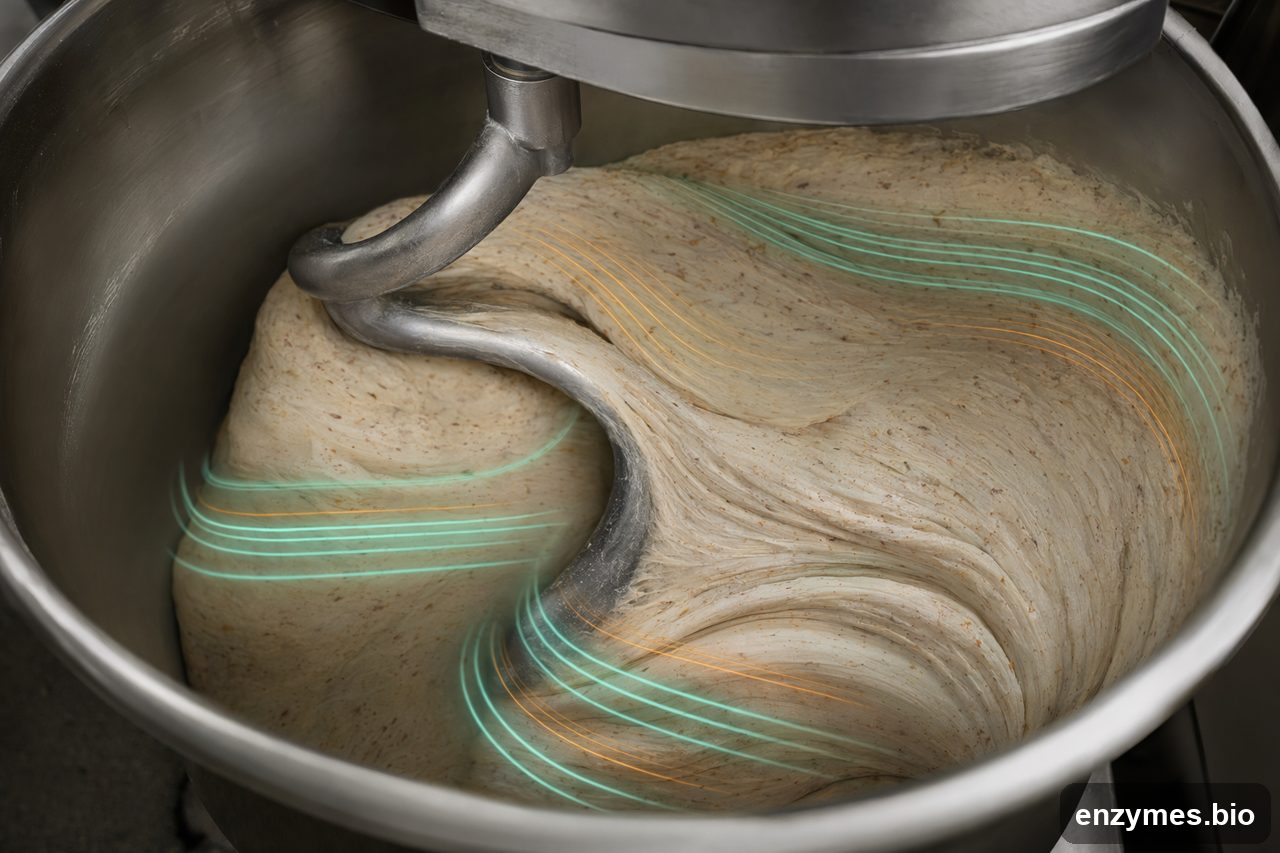
Xylanase Enzyme Solutions focuses on the industrial use case: reliable flour correction, clean handling behavior, and bakery outcomes that hold up across production shifts. Xylanase belongs to the wider hemicellulase family, and this hemicellulase supplier page covers sourcing hemicellulase for baking, feed, pulp, brewing, and biomass conversion.
What xylanase does in wheat dough
Wheat flour contains arabinoxylans in two broad forms: water-extractable and water-unextractable. Both interact with water, gluten development, and gas retention.
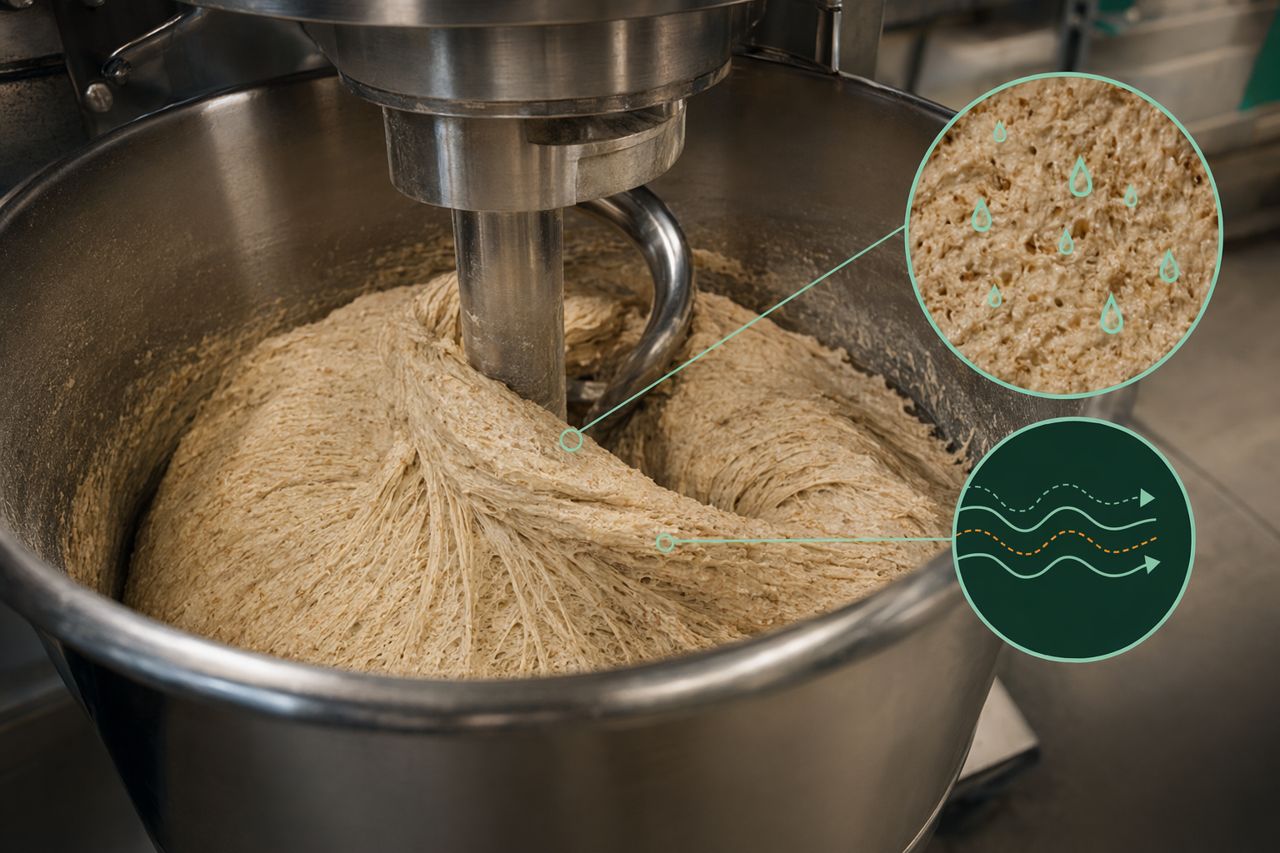
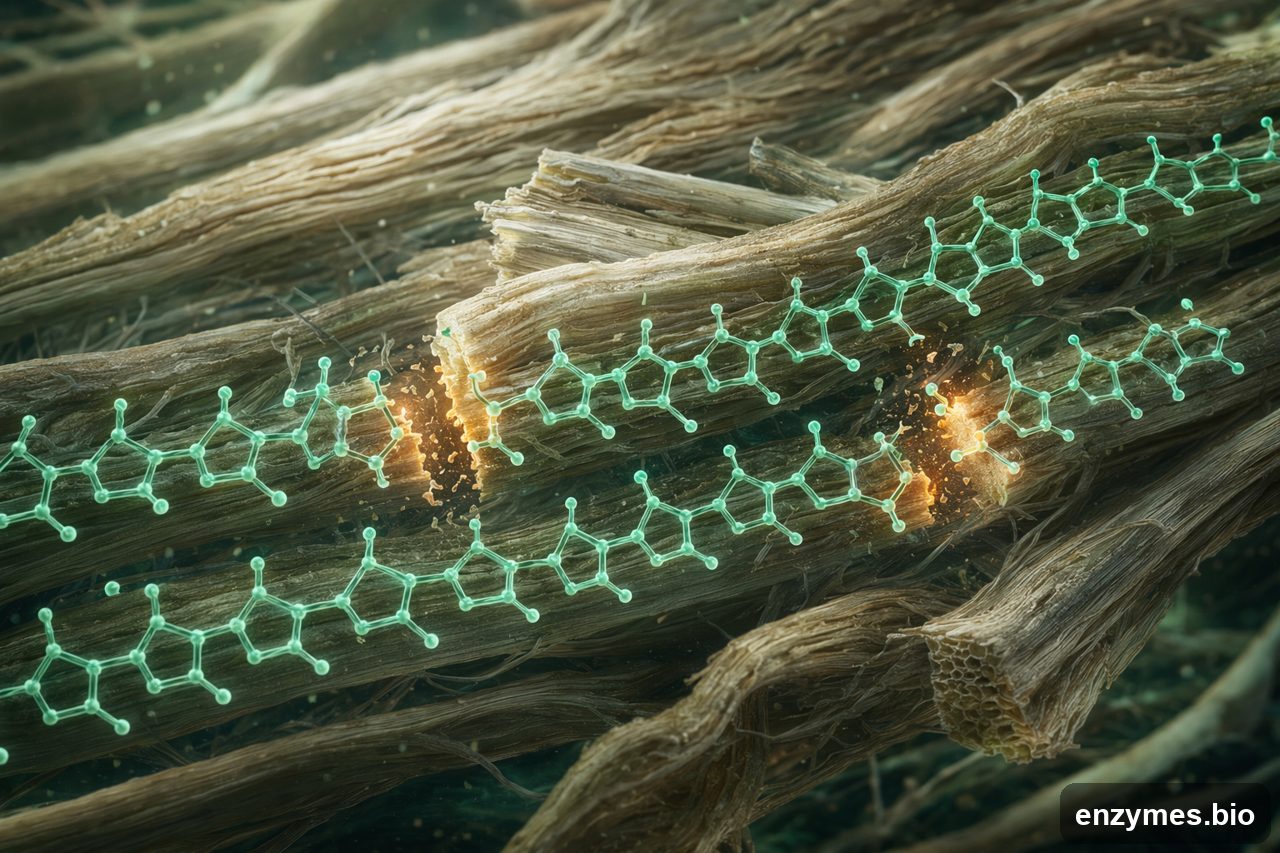
Xylanase selectively opens the xylan backbone of arabinoxylans. In bakery systems, this can:
- redistribute water from fiber-bound fractions into the dough phase
- reduce excessive viscosity in dough and batter systems
- improve dough extensibility without uncontrolled slackening
- support gas expansion during proofing and oven spring
- improve crumb uniformity and softness perception
- increase tolerance to flour variation, especially in bran-containing systems
The goal is not simply to “break down fiber.” The commercial target is controlled modification: enough to improve handling and structure, not so much that dough becomes sticky, weak, or difficult to machine.
Where it is used
Pan bread and sandwich bread
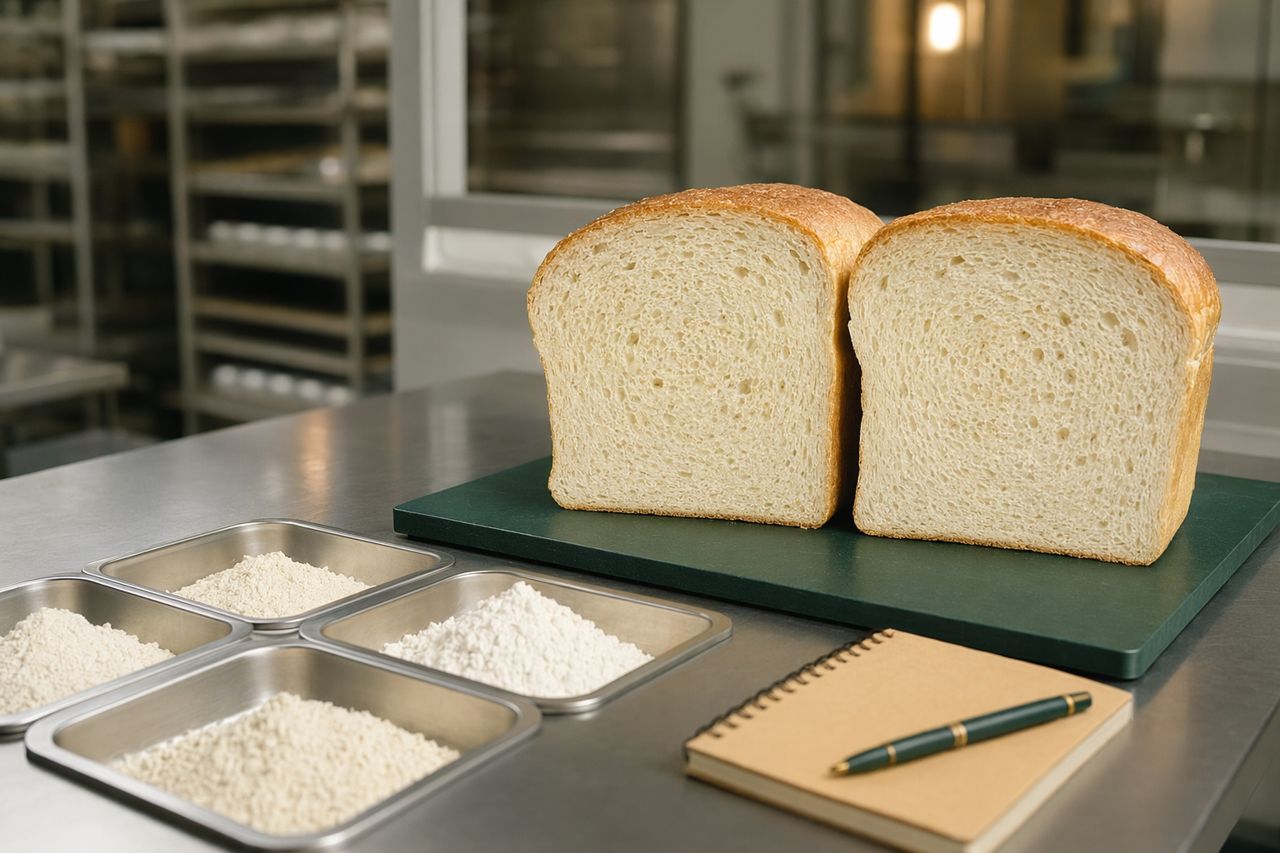
Xylanase is commonly used to support loaf volume, softer crumb, and more consistent slicing quality. It is especially useful where flour strength fluctuates or where process conditions demand high dough tolerance.
Buns, rolls, and enriched doughs
In formulas with fat, sugar, inclusions, or high-speed mixing, xylanase can help balance water availability and gas retention. The result can be more regular shape, improved expansion, and reduced tight crumb.
Whole wheat and high-fiber bread
Bran and fiber fractions bind water and physically interfere with gluten network formation. Xylanase can reduce the negative impact of arabinoxylans, improving dough handling and final texture without removing the fiber identity of the product.
Crackers, flatbreads, and fermented dough sheets
In sheeted products, xylanase can be used to tune dough relaxation, sheetability, and bite. Control is important: excessive relaxation can reduce dimensional stability.
Frozen and par-baked systems
Xylanase may be part of an enzyme system designed to maintain dough performance after freeze, thaw, proof, or bake-off. It is often evaluated alongside amylase, oxidizing systems, and emulsifier strategies.
Xylanase in compound improvers for steamed buns
Steamed bun makers ask an improver for three visible results: a bigger bun, a bright, smooth skin and a soft inside. Compound enzyme improvers made for steamed buns combine xylanase with fungal alpha-amylase, lipase and glucose oxidase, so the blend covers dough water, volume, softness and surface together rather than relying on one enzyme.
For an improver blender, this means xylanase usually goes to a steamed-bun plant as one line in a compound formula built for steaming, not as a stand-alone enzyme. Steaming has no crust and no oven spring, so the blend is judged on bun size, skin finish and softness straight out of the steamer. If you blend improvers for steamed buns, mantou or other steamed dough, tell us the flour, the other enzymes in the formula and the target product, and we quote a xylanase grade for that blend.
Commercial outcomes buyers usually target
A baking-grade xylanase program is typically justified by one or more measurable plant outcomes:
- more stable water absorption across flour lots
- less dough tightening or tearing during makeup
- improved machinability on dividers, rounders, moulders, and sheeters
- stronger proof tolerance and better oven spring
- more uniform cell structure in the crumb
- reduced reject rate from low volume, dense crumb, or poor sliceability
- better performance in whole wheat or fiber-enriched formulas
- lower dependency on over-correction with gums or emulsifiers
The best result is usually not a single dramatic change. It is a tighter operating window: less flour-to-flour surprise, fewer production interruptions, and more consistent finished goods.
Formulation considerations
Flour type matters
Hard wheat, soft wheat, whole wheat, high-extraction flour, and flour with added bran respond differently. Arabinoxylan level, starch damage, protein quality, and water absorption all affect the response.
Process intensity matters
High-speed mixing, long fermentation, no-time dough, sponge-and-dough, frozen dough, and automated makeup lines each place different stress on the dough system. Xylanase selection should match the process, not just the formula.
Balance with other enzyme systems
Xylanase is frequently used with fungal alpha-amylase, maltogenic amylase, glucose oxidase, lipase, or other improvers. The interaction can be positive, but it must be trialed. A formula that improves volume may still need adjustment for stickiness, proof tolerance, or crumb resilience.
Avoid over-treatment
Too much arabinoxylan modification can create sticky dough, weak sidewalls, collapsed structure, or gummy crumb. Controlled addition and flour-specific validation are essential.
How to evaluate xylanase in bakery trials
A useful trial should compare more than loaf height. We recommend tracking:
- flour lot and specification baseline
- water absorption and mixing curve behavior
- dough temperature, mixing time, and development endpoint
- divider and moulder performance
- stickiness during makeup
- proof height and proof tolerance
- oven spring and loaf symmetry
- crumb cell distribution and slice quality
- crumb softness over shelf life
- operator comments from the line
Bench testing can identify direction. Pilot or plant trials confirm whether the enzyme improves the manufacturing window under real mechanical stress.
What to request when sourcing baking xylanase
For bakeries, flour mills and improver blenders, the most useful supplier information includes:
- intended bakery application and flour type
- formulation format: powder, granule, or liquid
- compatibility with improver blends or premixes
- thermal behavior during mixing, proofing, and early baking
- expected handling profile in dough systems
- which documents your market requires for a food-grade enzyme
- packaging format and storage conditions
- recommended trial approach for your product line
Xylanase Enzyme Solutions supports application-driven discussions rather than generic enzyme substitution. The same enzyme label can behave differently depending on substrate, process, and formulation architecture.
Typical fit in an industrial baking workflow
Xylanase can be added through:
- flour correction at the mill or premix stage
- bakery improver blends
- dry ingredient dosing systems
- liquid improver systems where compatible
- product-specific flour standardization programs
For multi-site bakery groups, the main value is repeatability: creating a formulation strategy that tolerates flour variation without requiring constant line-side intervention.
Request a wholesale quote
We supply baking-grade xylanase for improvers, flour correction and industrial bakeries in bulk to manufacturers, blenders, distributors and resellers, on a quote-only basis. To get a grade recommendation and a price, send the product or application, the quantity (trial lot, monthly or annual volume), the destination country, and the process step where the enzyme will be added. Form and pack size are quoted per order, and we tell you which documents are available for that grade.